Evaluating the 3D Robin Mug Wrap Sublimation for Professional Craft Production
In the competitive landscape of custom merchandise, the distinction between a standard product and a premium item often lies in the visual depth and quality of the design application. For sublimation printers and small business owners, the 3D Robin Mug Wrap Sublimation represents a specific category of digital asset designed to elevate the aesthetic appeal of drinkware. Unlike flat, two-dimensional graphics that can sometimes appear static on curved surfaces, this type of design utilizes shading, layering, and perspective to create an illusion of dimensionality. When applied to a 20 oz skinny mug or a standard 15 oz ceramic cup, the result is a wrap that feels integrated into the product rather than simply stuck onto it.
This analysis explores the practical utility, technical specifications, and market viability of using a 3D Robin Mug Wrap Sublimation file. By understanding the nuances of these digital downloads, creators can make informed decisions about whether this asset fits their current workflow and client demands.
The Visual Impact of 3D Design Elements
The primary value proposition of a 3D Robin design lies in its ability to capture attention through realism. Traditional sublimation designs often rely on vector art or flat illustrations. While effective, they lack the textural nuance that modern consumers increasingly expect. A Robin watercolor style rendered with 3D techniques mimics the soft gradients and organic shadows found in nature. When this is translated into a Robin seamless pattern or a focused central image, it interacts with the curvature of the mug to enhance the perception of depth.
For professionals evaluating this asset, the "3D" descriptor usually refers to the artistic rendering rather than a literal three-dimensional object. It implies high-contrast lighting effects, detailed feather textures, and background elements that recede visually, allowing the subject—the robin—to pop forward. This technique is particularly effective on straight mug wrap PNG formats where the entire surface area is utilized. The psychological effect on the end-user is significant; a mug that looks like it features a living scene often commands a higher price point than one with a simple logo or clipart.
Technical Specifications and File Usability
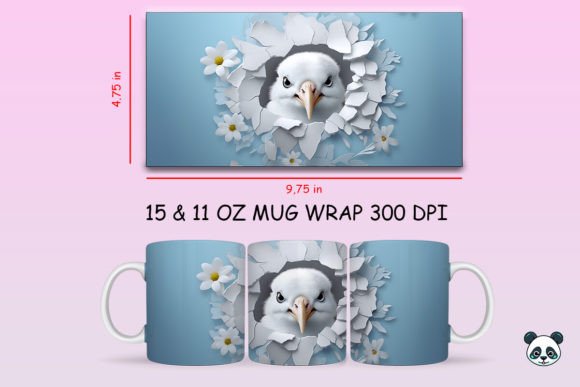
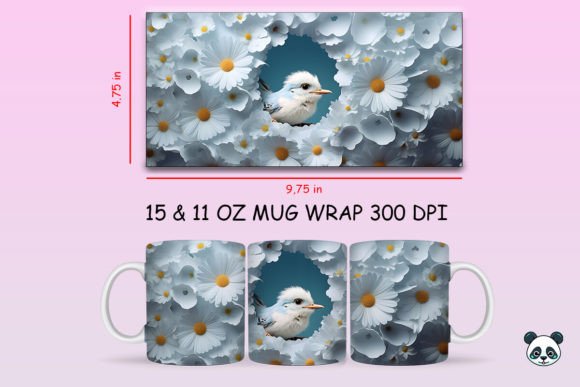
From a production standpoint, the reliability of a digital download is paramount. A professional-grade 3D Mug Wrap should be delivered as a high-resolution PNG file, typically at 300 DPI (dots per inch). The specific dimensions mentioned in standard packages, such as 9.75 in x 4.75 in, are critical. These measurements are not arbitrary; they are calculated to account for the circumference and height of popular sublimation blanks, specifically the 20 oz skinny mug and the 11 oz or 15 oz standard mugs.
When working with an Instant Digital Download PNG, the user must verify that the file includes necessary bleed areas. In sublimation, the heat press process can cause slight shifting. A well-designed mug wrap template anticipates this by extending the background pattern slightly beyond the cut line. The inclusion of a Robin background that is seamless ensures that if the wrap overlaps slightly during application, there are no jarring white lines or broken patterns. This consistency is a hallmark of a high-quality sublimation design.
Furthermore, the transparency of the PNG format is essential. While many wraps are full-coverage, having the ability to isolate the Robin png element allows for customization. A skilled operator might choose to place the 3D robin on a colored mug blank rather than white, requiring the background of the digital file to be removable or adaptable. The versatility of receiving a single ZIP file containing these optimized layers streamlines the pre-press workflow, reducing the time spent on manual editing in software like Photoshop or Illustrator.
Practical Applications for Business and Hobbyists
Who benefits most from integrating a 3D Robin Mug Wrap Sublimation into their inventory? The answer spans several demographics within the maker community. Small business owners specializing in seasonal goods will find immense value here. Robins are culturally associated with spring, renewal, and birdwatching communities. A Robin skinny Mug design can be marketed effectively during Easter, Mother's Day, or the start of the gardening season.
Additionally, educators and corporate gift coordinators looking for nature-themed merchandise can utilize these designs to create cohesive sets. Because the asset is a digital download, there is no inventory risk. A freelancer can purchase the file once and produce hundreds of units as orders come in, maintaining a lean business model. The 3D background elements also allow for cross-product application. The same graphic logic used for the mug can often be adapted for coasters, tumblers, or tote bags, maximizing the return on investment for the initial file purchase.
For serious hobbyists, the appeal lies in the professional finish. Many amateurs struggle with creating realistic shadows and highlights manually. Utilizing a pre-made 3D design allows them to produce gifts that look store-bought or even superior to retail options, fostering confidence in their crafting abilities.
Performance in Real-World Sublimation
Theoretical design quality must always be tested against physical reality. How does a 3D Mug wrap perform under heat and pressure? The success of the transfer depends heavily on the source file's resolution and color profile. A 300 DPI file ensures that the fine details of the robin's feathers do not pixelate when stretched over the ceramic curve. Lower resolution files often result in banding or blurriness, which destroys the 3D illusion.
Color accuracy is another critical factor. Watercolor styles rely on subtle shifts in hue. If the Robin watercolor tones are too saturated in the digital file, they may burn or shift unpredictably in the heat press. High-quality providers calibrate their Sublimation Designs to account for the typical color shift that occurs during the sublimation process, ensuring the final product matches the on-screen preview. Users should always print a test strip on sublimation paper before committing to a full production run, especially when dealing with complex gradients found in 3D renders.
Consistency is key for batch production. If a business owner orders fifty 20 oz Skinny Mug Sublimation Design wraps, every single transfer must align perfectly. Seamless patterns are particularly useful here, as they hide minor alignment errors better than distinct, bordered images. The reliability of the mug wrap sublimation file directly impacts the waste rate of the business; a flawed file leads to wasted blanks, paper, and ink.
Limitations and Considerations
While the advantages are clear, potential buyers must approach these digital assets with realistic expectations. First, it is crucial to remember that purchasing a 3D Robin Mug Wrap Sublimation file grants access to the intellectual property for creation, not the physical mug itself. The buyer must possess the hardware—heat press, printer, and blanks—and the technical knowledge to operate them. The file does not include tutorials on how to press a mug, though the provider often assumes a baseline level of competency.
Secondly, the "3D" effect is optical. It does not provide tactile texture. Customers expecting a raised surface may be disappointed if the description is not clear. Marketing materials should emphasize the visual depth rather than physical relief. Finally, licensing terms vary. Some Digital Download files are for personal use only, while others allow for unlimited commercial production. Professionals must verify the license agreement included in the ZIP file to ensure compliance, particularly if selling on platforms like Etsy or Amazon Handmade.
Final Verdict on Utility and Value
The 3D Robin Mug Wrap Sublimation stands out as a robust tool for anyone looking to upgrade their sublimation portfolio. Its strength lies in the intersection of artistic trendiness—nature and watercolor themes—and technical precision. The provision of a high-resolution, correctly sized PNG eliminates the most time-consuming part of the design process: creating realistic depth from scratch.
For those with an established workflow, this asset offers immediate scalability. The ability to instantly download and deploy a design that rivals custom-commissioned artwork provides a significant competitive edge. Whether utilized for a limited spring collection or as a staple in a year-round birding niche, the Robin wrap delivers consistent, high-quality results when paired with proper sublimation techniques. As long as the user respects the technical requirements of 300 DPI printing and understands the nature of digital licensing, this resource serves as a reliable foundation for profitable and creative mug production.