Evaluating the 3D Shadow Box Solar System for Modern Decor and Design
In the evolving landscape of interior design and digital fabrication, the intersection of astronomy and layered art has produced some compelling results. Among these, the 3D Shadow Box Solar System stands out as a project that bridges educational value with sophisticated aesthetics. For professionals ranging from interior decorators to laser cutting enthusiasts, understanding the utility and execution of this specific design asset is crucial. It is not merely a decorative item; it represents a test of precision, material selection, and spatial awareness. This analysis explores the practical applications, technical requirements, and real-world performance of creating a 3D Shadow Box Solar System using available digital templates.
The Intersection of Depth and Astronomy in Wall Art
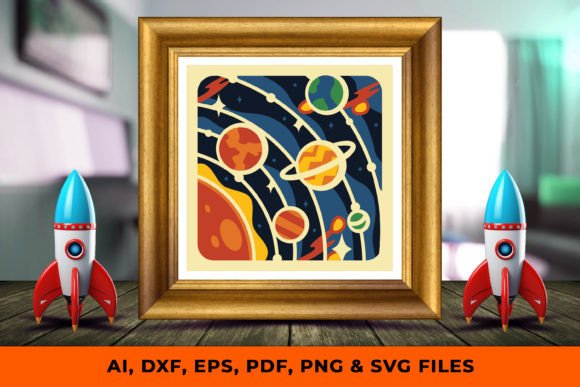
The concept of a shadow box relies on the manipulation of depth to create a three-dimensional illusion within a confined frame. When applied to the solar system, the challenge increases significantly. A flat print of the planets lacks the gravitas of their actual scale and distance, even when stylized. A 3D Shadow Box Solar System addresses this by utilizing multiple layers of material—typically wood, acrylic, or heavy cardstock—to separate celestial bodies from the background and from each other. This layering technique mimics the vastness of space, allowing light and shadow to play across the surfaces of the planets and the orbital paths.
What makes this specific type of project worth discussing is its versatility. Unlike a static painting, a shadow box changes appearance depending on the ambient lighting and the viewing angle. For educators and museum curators, this offers a tactile way to demonstrate orbital mechanics. For home decor enthusiasts, it provides a focal point that feels dynamic rather than static. The success of such a piece hinges on the quality of the underlying design files and the creator's ability to interpret those files into physical form.
Technical Specifications and File Format Utility
The backbone of any successful fabrication project is the source file. High-quality assets for a 3D Shadow Box Solar System typically come in a suite of formats, including SVG, PNG, PDF, AI, EPS, and DXF. Each format serves a distinct purpose in the workflow of a creator.
- SVG and DXF: These are vector formats essential for laser cutters and CNC machines. They ensure that the lines defining the planets, rings, and frame remain crisp regardless of the final size of the project. For a professional using a Glowforge or similar device, these files are non-negotiable for clean cuts.
- AI and EPS: Preferred by graphic designers using Adobe Illustrator, these formats allow for deep customization. A marketer creating a branded version of the solar system for a tech company might need to adjust colors or swap out planet textures to match corporate identity. These editable vectors facilitate that level of control.
- PDF: Often used for printing guides or paper-crafting versions. This is particularly useful for educators who may not have access to industrial cutting tools but still wish to assemble a model with students using scissors or craft knives.
- PNG: While less useful for cutting, high-resolution PNGs are vital for previewing the design or using it in digital mockups before committing to physical materials.
The availability of this comprehensive file set indicates a professional-grade asset. It suggests that the designer understands the diverse needs of their audience, from the hobbyist with a Cricut to the industrial fabricator. Flexibility in file types reduces friction in the production process, allowing the creator to focus on assembly and finishing rather than troubleshooting incompatible software.
Material Selection and Structural Integrity
Creating a 3D Shadow Box Solar System is as much about engineering as it is about art. The choice of material directly impacts the visual weight and durability of the final piece. Wood, such as birch plywood or walnut veneer, offers a warm, organic feel that contrasts beautifully with the cold void of space. However, wood requires careful sanding and finishing to prevent splintering, especially on intricate details like Saturn's rings or asteroid belts.
Acrylic is another popular choice, particularly for achieving a modern, sleek look. When backlit, acrylic layers can glow, simulating the luminosity of stars or the sun. The transparency allows for overlapping effects that are impossible with opaque materials. However, acrylic demands higher precision in cutting; improper settings can lead to melting edges or cloudiness that ruins the optical clarity.
For those working with paper or cardstock, the limitation lies in structural rigidity. Multiple layers must be spaced correctly using foam core or specialized spacers to achieve the desired depth without the piece sagging over time. Regardless of the medium, the consistency of layer thickness is paramount. If the spacing between the Earth and the Moon varies unintentionally, the illusion of depth collapses, and the piece loses its impact.
Practical Applications Across Different Sectors
The utility of a 3D Shadow Box Solar System extends beyond simple home decoration. Various professional sectors can leverage this design for specific outcomes:
- Education and STEM: Teachers can use these models to engage students in physics and astronomy. The tactile nature of assembling the layers reinforces concepts of scale and order. A classroom display built from a shared template can become a collaborative project that fosters teamwork.
- Interior Design: Designers seeking unique statement pieces for offices, lobbies, or residential spaces can customize the color palette to match existing decor. A monochromatic version in black and white fits minimalist aesthetics, while a vibrant, textured version suits eclectic styles.
- Corporate Gifting and Branding: Tech companies and aerospace firms often look for meaningful gifts for clients or employees. A custom-engraved shadow box featuring the company logo alongside the solar system demonstrates attention to detail and appreciation for innovation.
- Content Creation: Bloggers and YouTubers in the DIY niche can use the assembly process as content. The visual appeal of the layering process makes for compelling time-lapse videos, driving engagement and showcasing the creator's skill.
Assessing Limitations and Execution Challenges
While the potential is high, prospective creators must acknowledge the challenges involved. The primary limitation is the complexity of assembly. Unlike a puzzle with interlocking pieces, a shadow box often relies on adhesives and precise alignment. A slight misalignment in the digital file or a slip of the hand during gluing can throw off the entire composition. Furthermore, the depth of the shadow box requires a frame with significant profile depth, which may not be readily available in standard retail stores.
Lighting is another critical factor. A 3D Shadow Box Solar System designed to be viewed under natural light will look drastically different under artificial spotlights. Shadows cast by the layers can obscure details if the light source is too harsh or positioned incorrectly. Creators should consider integrating LED strips within the frame itself to ensure consistent illumination that highlights the intended features.
Additionally, scale accuracy is often sacrificed for aesthetic balance. In a true-to-scale model, the planets would be microscopic compared to the distances between them. Most artistic interpretations compress these distances to fit within a standard frame. While this makes for a better visual product, it is important for educators to clarify this distinction if the model is used for strict scientific instruction.
Long-Term Value and Customization Potential
The long-term value of investing in a high-quality 3D Shadow Box Solar System template lies in its reusability and adaptability. Once a creator masters the assembly technique with one set of materials, they can replicate the design in different mediums for various clients. The ability to tweak the SVG or AI files means the design never truly becomes obsolete; it can evolve with trends. For instance, adding a textual layer with inspirational quotes or updating the starfield background keeps the design fresh.
Moreover, the skills gained through this project—precision cutting, layer management, and spatial planning—are transferable to other complex fabrication tasks. For freelancers and small business owners, this project serves as an excellent portfolio piece that demonstrates technical proficiency and artistic sensibility.
Final Recommendations for Prospective Creators
For those considering undertaking this project, the recommendation is to start with a thorough review of the provided files. Verify that the vector paths are closed and that the dimensions match your intended frame size. Test cuts on scrap material are essential to dial in machine settings before committing to expensive stock.
Consider the end environment of the piece. Will it hang in a dimly lit hallway or a sun-drenched living room? This decision should dictate your material choice and whether you incorporate internal lighting. Finally, do not underestimate the power of finishing touches. A coat of matte varnish on wood can unify the layers, while polished edges on acrylic can elevate the professional look of the final product.
The 3D Shadow Box Solar System is more than a craft project; it is a demonstration of how digital precision can enhance physical storytelling. Whether used for education, decor, or commercial purposes, its effectiveness depends on the careful marriage of good design files and thoughtful execution. By respecting the technical nuances and leveraging the flexibility of the available formats, creators can produce works that are both visually striking and enduringly relevant.