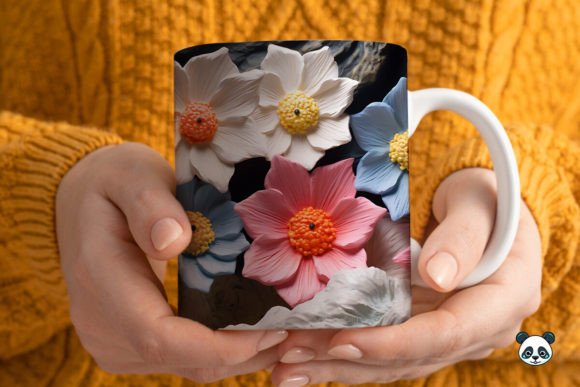
Evaluating 3D Japanese Anemone Mug Wrap Sublimation for Custom Drinkware Projects
For crafters and small business owners specializing in custom drinkware, the shift from flat, two-dimensional graphics to immersive 3D Japanese Anemone Mug Wrap Sublimation designs represents a significant evolution in product quality. This specific style utilizes high-resolution digital files, often available as instant downloads, to transform standard straight or skinny mugs into pieces that appear to have depth and texture without the need for physical embossing. Understanding the nuances of this technique, particularly when working with floral motifs like the Japanese Anemone, requires a clear evaluation of file specifications, printer capabilities, and the intended aesthetic outcome compared to traditional sublimation methods.
Defining the 3D Aesthetic in Digital Sublimation
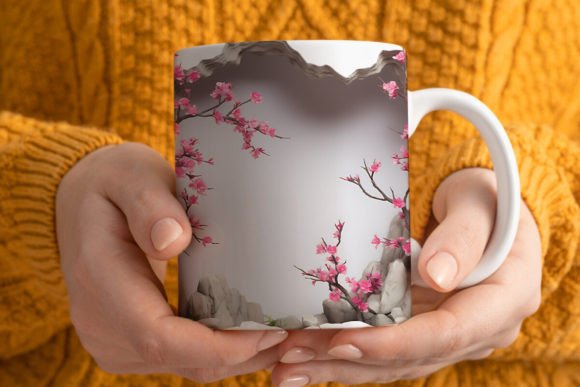
The term "3D" in the context of a Japanese Anemone mug wrap does not refer to a physical alteration of the mug's surface. Instead, it describes a sophisticated graphic design approach where lighting, shadow, and layering are manipulated within a PNG file to create an optical illusion of depth. When applied to a 20 oz skinny mug or a standard 15 oz vessel, these designs make the watercolor petals of the anemone appear as though they are floating above the ceramic surface.
This effect is distinct from standard flat prints because it relies heavily on the resolution and color fidelity of the source image. A high-quality 3D Japanese Anemone background typically operates at 300 DPI, ensuring that when the image is stretched over the curvature of a mug, the fine details of the flower's center and the delicate gradients of the petals do not pixelate. The seamless nature of these patterns allows the design to flow continuously around the circumference of the mug, eliminating harsh cut-off lines that can disrupt the visual immersion.
Comparative Analysis: 3D Wraps vs. Traditional Flat Designs
When deciding between a 3D mug wrap sublimation design and a traditional flat graphic, several factors come into play regarding production effort and final perceived value.
- Visual Impact: Flat designs, while effective for bold logos or simple text, often lack the tactile realism that 3D-style florals provide. The Japanese Anemone watercolor style leverages soft edges and layered transparency, which mimics the look of hand-painted ceramics. In contrast, flat vector art can sometimes appear stark or "stuck on" if not carefully integrated with the mug's white space.
- Design Complexity: Utilizing a pre-made 3D Japanese Anemone seamless pattern saves considerable time compared to creating a 3D effect from scratch. Achieving this level of depth manually requires advanced skills in software like Photoshop or Illustrator to map shadows and highlights correctly. For many creators, purchasing a digital download offers a shortcut to professional-grade results without the steep learning curve.
- Versatility: While 3D floral wraps are stunning, they are not universally applicable. A busy 3D background might overwhelm a design that requires prominent, legible text. In scenarios where personalization (such as names or dates) is the primary goal, a simpler Japanese Anemone PNG with more negative space might be a more functional choice than a full-coverage 3D wrap.
Technical Considerations for Skinny and Straight Mugs
The geometry of the substrate plays a crucial role in how a 3D mug wrap performs. The market currently favors two main shapes: the standard 11 oz or 15 oz straight mug and the increasingly popular 20 oz skinny mug. Each presents unique challenges and opportunities for the Japanese Anemone wrap designer.
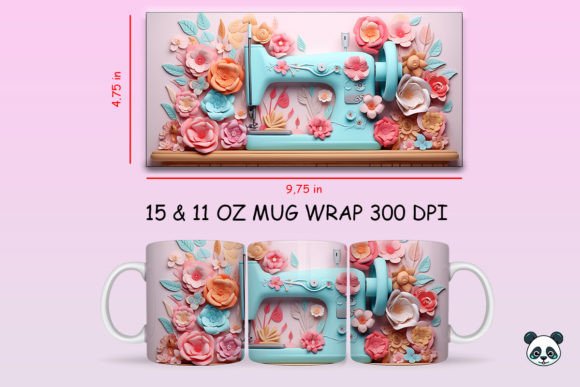
Straight Mugs (11 oz and 15 oz): These offer a broader canvas, typically requiring a wrap size around 9.75 inches by 4.75 inches. The wider surface area allows the 3D Japanese Anemone pattern to breathe, showcasing the full bloom of the flowers. However, the shorter height means vertical composition must be precise; placing key focal points too close to the rim or base can result in them being obscured by the user's hand or mouth.
Skinny Mugs (20 oz): The tall, narrow profile of the skinny mug changes the dynamic of the design. A 20 oz skinny mug sublimation design requires the pattern to be elongated vertically. When using a seamless pattern, the repetition must be carefully managed so that the flowers do not look stretched or distorted. The 3D effect can be particularly striking here, as the vertical flow guides the eye up and down the length of the cup, enhancing the perception of height and elegance.
File Formats and Preparation
Success in sublimation hinges on the quality of the digital asset. Most professional resources provide these designs as Instant Digital Download PNG files. The PNG format is critical because it supports transparency, allowing the designer to overlay the Japanese Anemone background onto other elements or adjust the mug's base color in a mockup before printing.
It is vital to verify that the downloaded file matches the dimensions of your specific mug wrap template. A file sized at 9.75 x 4.75 inches at 300 DPI is optimized for standard straight mugs. Using this same file on a skinny mug without adjusting the aspect ratio will result in a distorted image. Conversely, stretching a small graphic to fit a large surface will degrade the 3D illusion, turning soft watercolor gradients into blocky artifacts.
Decision Factors: When to Choose This Style
Selecting a 3D Japanese Anemone Mug Wrap Sublimation design is not always the automatic best choice; it depends on the target audience and the specific use case.
Ideal Scenarios:
- Gift Markets: The realistic, artistic look of a 3D waterflower anemone appeals strongly to customers looking for gifts for gardeners, teachers, or mothers. The perceived value is higher due to the complex appearance of the print.
- Boutique Branding: For shops aiming to establish a high-end, artisanal brand identity, these wraps differentiate products from the mass-market, clip-art style mugs found in big-box stores.
- Seasonal Collections: The Japanese Anemone, blooming in late summer to autumn, fits perfectly into fall-themed collections where warm, organic tones are desired.
Potential Limitations:
- Printer Requirements: To truly capture the nuance of a 3D background, your sublimation printer must have excellent color gamut and resolution. Lower-end printers may struggle to reproduce the subtle shadow gradients that create the 3D effect, resulting in a flatter final product.
- Mug Coating Quality: The 3D illusion relies on the glossiness and whiteness of the mug's polymer coating. Off-white or matte-finish mugs will absorb the light differently, diminishing the pop and depth of the anemone petals.
- Customization Constraints: As noted earlier, full-coverage 3D wraps leave little room for adding custom text post-print. If the business model relies heavily on on-demand personalization, a hybrid approach—using a 3D element as a accent rather than a full wrap—might be more practical.
Practical Application and Workflow
Integrating these designs into a workflow is straightforward but requires attention to detail. After acquiring the digital download, the creator should import the PNG into their design software. It is advisable to place the image onto a digital mug wrap template that matches the exact dimensions of the physical mug being used. This step ensures that the seam line (where the start and end of the wrap meet) falls in an inconspicuous area, ideally hidden within the darker shadows of the Japanese Anemone seamless pattern.
Once printed on sublimation paper, the transfer process remains standard: heat press at the recommended temperature and time for the specific mug type. However, because 3D designs often utilize a wider range of colors and gradients, performing a test press on a spare mug is highly recommended. This allows the creator to verify that the color profile of the printer matches the vibrancy seen on the screen, ensuring the 3D design translates accurately from pixel to ceramic.
In conclusion, the 3D Japanese Anemone Mug Wrap Sublimation offers a compelling middle ground between the ease of digital printing and the aesthetic appeal of hand-crafted pottery. By understanding the technical requirements of the file formats, the geometric constraints of different mug sizes, and the specific market appeal of realistic floral art, creators can make informed decisions about when to deploy this style. While it demands higher quality inputs and careful preparation than basic flat graphics, the resulting product offers a distinct competitive edge in a crowded marketplace.