Evaluating 3D Sewing Machine Mug Wrap Sublimation for Custom Drinkware
The market for personalized drinkware has expanded significantly with the rise of sublimation printing, allowing creators to produce high-quality, full-color designs on ceramic surfaces. Among the various design trends, the 3D Sewing Machine Mug Wrap Sublimation has emerged as a specific niche appealing to crafters, sewing enthusiasts, and small business owners. This article evaluates the characteristics, applications, and practical considerations of using this specific digital asset to create custom mugs, helping readers determine if it aligns with their production goals.
Understanding the Design Asset
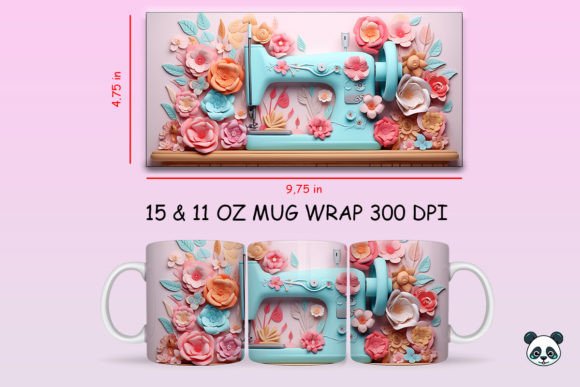
A 3D Sewing Machine Mug Wrap Sublimation refers to a pre-designed digital file intended to be printed onto sublimation transfer paper and heat-pressed onto a mug. Unlike flat, two-dimensional illustrations, these designs utilize shading, perspective, and layering techniques to create the illusion of depth, making the sewing machine appear three-dimensional on the curved surface of the cup. Typically, these files are provided as high-resolution PNGs, often at 300 DPI, to ensure crisp lines and vibrant color reproduction during the printing process.
The standard dimensions for these wraps usually cater to popular mug sizes, such as the 20 oz skinny mug or the traditional 11 oz and 15 oz straight mugs. For instance, a common file size is approximately 9.75 inches by 4.75 inches, which is optimized for the circumference and height of a 20 oz skinny mug. It is crucial for users to understand that purchasing this item involves acquiring a digital download only; no physical mugs or printed transfers are included. The buyer is responsible for possessing the necessary hardware, including a sublimation printer, heat press, and blank coated mugs, to execute the final product.
Target Audience and Application Scenarios
The primary audience for a Sewing Machine Mug Wrap consists of individuals within the crafting and quilting communities. These designs serve as highly relevant gifts for seamstresses, tailors, fashion students, or anyone who identifies strongly with the hobby of sewing. The specificity of the imagery—often featuring detailed depictions of vintage or modern machines, sometimes accompanied by watercolor textures or seamless patterns—makes it a strong fit for niche marketing.
Small business owners who operate print-on-demand shops or sell handmade goods at local craft fairs may find significant value in these assets. By utilizing a 3D Sewing Machine seamless pattern or a focused wrap design, vendors can offer specialized products that stand out against generic stock imagery. The "3D" aspect adds a premium feel, suggesting a higher level of design sophistication compared to simple clip art. This can justify a higher price point for the finished mug, provided the sublimation transfer is executed correctly.
Benefits of Using Pre-Made Digital Wraps
One of the most significant advantages of utilizing an Instant Digital Download PNG for sublimation is efficiency. Creating a realistic 3D illustration of a sewing machine from scratch requires advanced graphic design skills, significant time investment, and specialized software knowledge. By licensing a pre-made design, creators can bypass the design phase and move directly to production. This is particularly beneficial for those who excel at the physical aspects of sublimation but lack confidence in their illustrative abilities.
Furthermore, professional-grade files are typically optimized for the sublimation process. A well-prepared mug wrap template accounts for color profiles and resolution requirements, reducing the risk of pixelation or color shifting during printing. The inclusion of a Sewing Machine background or a 3D background within the design ensures that the entire surface of the mug is utilized effectively, creating an immersive visual experience rather than a isolated image floating on a white void.
Technical Considerations and Tradeoffs
While the benefits are clear, there are technical tradeoffs and considerations that buyers must evaluate before purchasing. The most critical factor is compatibility with the specific mug blank being used. A design formatted for a 20 oz Skinny Mug Sublimation Design will not fit an 11 oz standard mug without significant distortion or cropping. Users must verify the dimensions of their blank mugs against the provided file size (e.g., 9.75 in x 4.75 in). If a creator primarily works with 15 oz mugs, they may need to source a different template or possess the skills to resize and adjust the artwork without losing quality.
Another consideration is the learning curve associated with sublimation itself. Possessing the digital file does not guarantee a perfect result. The user must understand how to mirror the image before printing, manage heat press temperature and pressure settings, and select appropriate sublimation paper and ink. The note that "you will need to know how to use these files" is a vital disclaimer; this product is not a turnkey solution for beginners unfamiliar with the sublimation workflow.
Additionally, while "3D" designs are visually striking, they can sometimes be busy. When wrapped around a cylindrical object, certain perspectives might look distorted depending on the viewing angle. A design that looks balanced in a flat preview might have elements that stretch awkwardly around the curve of the mug. Buyers should review mockups carefully to ensure the 3D effect translates well to a curved surface.
When to Consider Alternatives
There are situations where a pre-made Sewing Machine PNG or wrap might not be the optimal choice. If a business requires total brand customization, such as integrating specific logos, unique color schemes that match a corporate identity, or text that is not included in the standard file, a custom design service or DIY creation might be necessary. Pre-made files offer limited flexibility for modification unless the user has access to layered source files (like PSD or AI), which are not always included in standard instant downloads.
Moreover, if the target audience prefers minimalist aesthetics, a highly detailed 3D Sewing Machine watercolor or complex seamless pattern might be too overwhelming. In such cases, a simple line-art icon or a typography-based design could be more effective. It is also worth noting that if a user does not own a sublimation printer, the cost of acquiring the equipment solely to use one or two digital downloads may not be cost-effective compared to outsourcing the printing to a third-party provider.
Making an Informed Decision
Deciding whether to invest in a 3D Mug Wrap featuring a sewing machine theme depends on a balance of skill level, equipment availability, and market demand. For those who already possess a sublimation setup and serve a niche community of sewing enthusiasts, these digital assets offer a high-return opportunity with minimal upfront design time. They allow for rapid prototyping and inventory expansion.
However, success relies on attention to detail regarding sizing and printing protocols. Users should ensure they are purchasing the correct template for their specific mug inventory (e.g., distinguishing between a straight mug wrap PNG and a skinny mug variant). By understanding the limitations of digital files and the requirements of the physical printing process, creators can effectively leverage these designs to produce high-quality, professional merchandise that resonates with their specific audience.