Mastering 3D Christmas Mug Wrap Sublimation for Professional Holiday Products
The holiday season represents a critical window for creators, small business owners, and hobbyists looking to capitalize on seasonal demand. At the heart of this opportunity lies the 3D Christmas Mug Wrap Sublimation process, a technique that transforms standard ceramic blanks into immersive, high-value gifts. Unlike traditional flat designs, a 3D approach utilizes depth, shadow, and layered imagery to create an illusion of dimensionality on a cylindrical surface. Understanding how to integrate these digital assets into a broader production workflow is essential for maintaining efficiency, ensuring quality control, and delivering products that stand out in a saturated market.
Understanding the Digital Asset and Workflow Integration
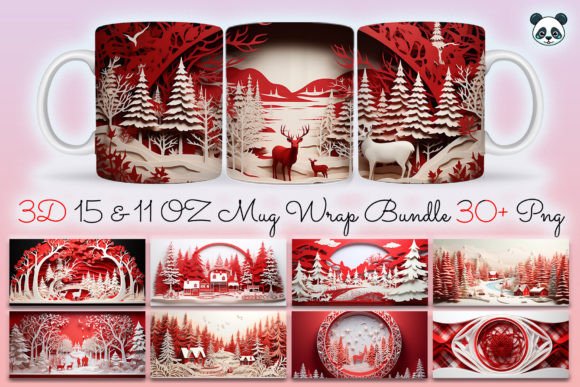
Before any physical printing occurs, the foundation of a successful project is the digital file itself. When you acquire an Instant Digital Download PNG specifically designed for sublimation, you are obtaining a pre-engineered asset optimized for specific mug dimensions, such as the popular 20 oz Skinny Mug or the standard 15 Oz and 11 Oz templates. These files typically come in high resolution, often at 300 DPI, with dimensions around 9.75 inches by 4.75 inches to ensure crisp output without pixelation.
In a professional workflow, these files serve as the starting point for a multi-stage process. They are not merely images but components that must interact seamlessly with your design software, printer profiles, and heat press settings. For entrepreneurs managing inventory, organizing these Christmas seamless pattern files into a structured library before the rush begins is a vital preparatory step. This organization allows for rapid retrieval and adaptation, whether you are creating a custom order for a client or batching products for retail sales.
Pre-Production Planning and Compatibility
Effective implementation begins with verifying compatibility between your digital assets and your hardware. A 3D Christmas Mug Wrap Sublimation Background featuring watercolor textures or complex geometric patterns requires precise color management. Before committing to a full print run, it is prudent to test how the specific Christmas png file renders on your specific printer using your chosen sublimation ink and paper combination. Factors such as color gamut and ink saturation can vary significantly between devices, affecting the final vibrancy of the Christmas watercolor elements.
Furthermore, understanding the physical constraints of the mug blank is crucial. A Straight Mug Wrap PNG designed for a tapered skinny mug will not fit correctly on a standard curved mug. Misalignment at this stage leads to wasted materials and time. Professionals often maintain a reference sheet detailing which template corresponds to which blank size—whether it is an 11 Oz Mug Template or a larger vessel—to prevent costly errors during the busy holiday season.
Execution: From Digital File to Physical Product
Once the digital preparation is complete, the focus shifts to the printing and pressing phase. The sublimation Design process involves transferring the ink from paper to the polymer-coated surface of the mug using heat and pressure. When working with 3D design elements, the alignment of the wrap is paramount. The "seam" where the edges of the paper meet must be positioned carefully, often at the handle or a less visible part of the design, to maintain the continuity of the Christmas 3D seamless pattern.
During the pressing stage, consistency is key. Using a mug press that provides even heat distribution ensures that the 3D background transfers uniformly without ghosting or blurring. For those utilizing a mug wrap template, securing the sublimation paper tightly against the mug with heat-resistant tape prevents shifting, which is especially important for intricate patterns where even a millimeter of movement can disrupt the visual flow. This attention to detail distinguishes amateur results from professional-grade merchandise.
Quality Control and Post-Processing
After the heat press cycle completes and the mug has cooled, the removal of the paper reveals the final product. This is the moment for rigorous quality control. Inspect the Christmas Mug wrap for any white spots, streaks, or color shifts. A successful 3d Mug wrap should exhibit vibrant colors and sharp details, with the 3D effect appearing natural rather than distorted by the curvature of the mug. Any defects identified here should be documented to adjust future press times or temperatures, contributing to a continuous improvement loop in your manufacturing process.
For sellers offering these items, packaging also plays a role in the perceived value. A well-executed Christmas skinny Mug design deserves protective packaging that highlights the artwork while ensuring safe delivery. Including care instructions for the sublimated surface helps customers maintain the longevity of the product, reducing return rates and enhancing customer satisfaction.
Strategic Applications for Business and Creativity
Beyond the technical execution, integrating 3D Christmas Mug Wrap Sublimation into your business strategy opens various avenues for growth. For marketers and content creators, these mugs serve as excellent branded merchandise or limited-edition holiday promotions. The uniqueness of a 3d mug sublimation design can drive social media engagement, as the visual depth of the product is highly shareable on platforms like Instagram and Pinterest.
Educators and workshop leaders can also utilize these digital assets to teach sublimation techniques. By providing students with ready-to-use Digital Download files, instructors can focus on teaching the mechanics of heat pressing and color theory rather than spending excessive time on graphic design. This streamlines the learning curve and allows participants to achieve professional results quickly, fostering confidence and encouraging further exploration of the craft.
Optimizing Efficiency and Scalability
As demand increases during the holidays, scalability becomes a primary concern. Relying on high-quality, pre-made seamless pattern files allows for rapid scaling of production without sacrificing design integrity. Instead of creating unique designs from scratch for every order, businesses can offer a curated collection of Christmas background themes that appeal to different demographics. This approach balances creativity with operational efficiency, enabling faster turnaround times.
Moreover, maintaining a library of versatile assets ensures long-term usability. A well-designed Christmas wrap can often be adapted for other products, such as tumblers or ornaments, with minor adjustments. This flexibility maximizes the return on investment for each digital purchase and supports a diverse product catalog. By treating these digital files as modular components within a larger system, creators can respond agilely to market trends and consumer preferences.
Final Considerations for Sustainable Success
Successfully leveraging 3D Christmas Mug Wrap Sublimation requires more than just owning the right files; it demands a disciplined approach to planning, execution, and quality assurance. Whether you are a freelancer fulfilling custom orders or a small business owner stocking shelves for the holiday rush, the integration of these digital tools into your workflow can significantly enhance your output. By focusing on compatibility, precision, and strategic application, you transform simple digital downloads into tangible, high-quality products that resonate with customers.
Remember that the value of these assets lies in their ability to streamline your creative process. With the right preparation and a clear understanding of the sublimation mechanics, you can consistently produce stunning 3d mug designs that capture the spirit of the season. As you continue to refine your techniques and expand your repertoire, these foundational practices will support sustainable growth and lasting success in the competitive world of custom merchandise.