Integrating 3D Alien Mug Wrap Sublimation into Your Product Workflow
In the competitive landscape of print-on-demand and custom merchandise, the difference between a standard product and a best-seller often lies in the quality of the design assets and the efficiency of the production workflow. For creators, small business owners, and hobbyists looking to expand their catalog with niche appeal, 3D Alien Mug Wrap Sublimation represents more than just a graphic; it is a strategic asset that fits into a broader manufacturing and sales process. Whether you are an educator creating classroom rewards, a marketer developing branded swag, or an entrepreneur launching an Etsy shop, understanding how to integrate these digital files into your existing operations is key to scalability and consistency.
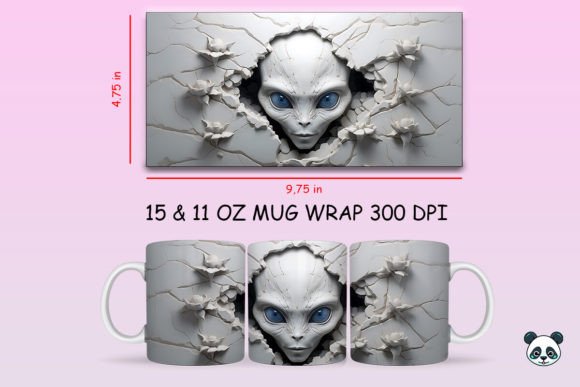
The concept of using a 3D Alien Mug Wrap Sublimation design begins long before the heat press is turned on. It starts with asset acquisition and preparation. When you purchase an instant digital download, such as a high-resolution PNG file sized specifically for a 20 oz skinny mug or a standard 15 oz mug, you are acquiring a component that must be seamlessly woven into your production pipeline. The "3D" aspect of these designs typically refers to the visual depth created by watercolor textures, shading, and seamless patterns that wrap around the curvature of the mug, giving the illusion of dimensionality without requiring complex 3D modeling software. This visual strategy captures attention in online marketplaces where flat graphics can often get lost in the scroll.
Pre-Production Planning and Asset Management
Before any physical printing occurs, the integration of 3D Alien Mug Wrap Sublimation files requires a disciplined approach to file management and compatibility checks. Upon receiving your digital download—usually a ZIP file containing a 9.75 x 4.75-inch PNG at 300 DPI—the first step in your workflow should be verification. Professional creators know that assuming a file is print-ready can lead to costly errors in material and time. You must confirm that the resolution matches your printer's capabilities and that the color profile (typically sRGB for sublimation) aligns with your monitor calibration.
Organization is critical at this stage. If you are managing a inventory of various designs, including Alien seamless patterns or Alien watercolor backgrounds, establish a naming convention that includes the mug size (e.g., 11 oz, 15 oz, 20 oz skinny) and the design theme. This prevents the common mistake of printing a straight mug wrap on a tapered skinny mug, which results in misalignment and wasted substrates. By treating the digital file as a precise blueprint rather than just an image, you ensure that the subsequent steps in your workflow proceed without interruption.
Furthermore, consider the context in which these designs will be used. Are you creating a limited edition run for a sci-fi convention, or is this part of a permanent collection for your online store? This decision dictates how you prepare the files. For limited runs, you might print directly from the downloaded PNG. For long-term product lines, it is advisable to create a master template in your design software where the 3D Alien Mug Wrap Sublimation graphic is locked into place alongside safety margins and cut lines. This ensures consistency across hundreds of units, maintaining brand integrity regardless of who is operating the press.
Execution: From Digital File to Physical Product
Once the assets are organized and verified, the process moves to the execution phase. This is where the theoretical planning meets the physical reality of sublimation printing. The beauty of using a pre-made Alien Mug wrap lies in its readiness; however, successful implementation depends on your handling of the substrate and the transfer process. Sublimation is a chemical process where ink turns into gas under heat and bonds with polymer-coated surfaces. Therefore, the quality of the mug blank is just as important as the quality of the 3D design.
When working with 20 oz Skinny Mug Sublimation Design files, pay close attention to the dimensions. Skinny mugs have a different circumference and height compared to standard 11 oz or 15 oz mugs. A design optimized for a straight wall mug may distort if forced onto a tapered surface without adjustment. Although many modern downloads come with specific templates for different mug types, always perform a test print on paper before committing to sublimation paper. This low-cost step allows you to wrap the paper around the mug to check for seam alignment and image placement, ensuring the Alien 3D seamless pattern flows correctly around the curve.
During the pressing phase, consistency in temperature, time, and pressure is non-negotiable. A 3D Mug wrap with intricate watercolor details and shading requires even heat distribution to prevent banding or ghosting. If your design features a dark Alien background, be particularly mindful of press settings, as darker inks can sometimes show imperfections more readily than lighter ones. Use high-quality sublimation tape to secure the wrap tightly; any gap between the paper and the mug can result in blurred edges, ruining the 3D effect you aimed to achieve.
Post-Production Quality Control and Scaling
The workflow does not end when the mug cools down. Integrating 3D Alien Mug Wrap Sublimation into a professional business model requires a robust quality control (QC) protocol. Every finished unit should be inspected for color vibrancy, alignment, and surface defects. Because these designs often rely on the illusion of depth, any misalignment at the seam can break the immersion of the Alien seamless pattern. Rejecting a flawed unit immediately protects your brand reputation and saves the customer from disappointment.
For those looking to scale, the modularity of digital downloads offers significant advantages. Since the Instant Digital Download PNG is a standalone asset, it can be easily repurposed across different products. The same Alien png elements used for the mug wrap can often be adapted for coasters, tumblers, or even apparel, provided you have the commercial license. This cross-platform usability maximizes the return on investment for each design purchase. Instead of treating the Alien wrap as a single-use item, view it as a core component of a larger thematic collection.
Efficiency also comes from batching. If you have multiple orders for alien-themed merchandise, group your production runs. Print all 3d Mug Wrap designs at once, then move to pressing. This reduces the setup time for your printer and heat press, allowing you to produce higher volumes with less fatigue. Additionally, keep a log of your press settings for specific mug brands and design types. Over time, this data becomes an invaluable resource, allowing you to replicate perfect results consistently without trial and error.
Strategic Integration for Business Growth
Beyond the technical aspects, incorporating 3D Alien Mug Wrap Sublimation into your business strategy involves understanding your audience. The alien theme appeals to a diverse demographic, from sci-fi enthusiasts to parents looking for unique gifts. By offering high-quality, visually striking products like the 20 oz Skinny Mug with a 3D effect, you position yourself as a provider of premium goods rather than generic commodities. This perception allows for better pricing power and customer loyalty.
Marketing these products effectively requires showcasing the unique selling points of the design. Highlight the watercolor texture and the 3D background depth in your product photography. Show the mug from multiple angles to demonstrate how the pattern wraps seamlessly. In your product descriptions, explain the care instructions clearly, as sublimated items are durable but require proper maintenance to retain their vibrancy. Transparency about the product being a digital download for creators versus a finished good for consumers is also essential to manage expectations and reduce support queries.
Ultimately, the value of 3D Alien Mug Wrap Sublimation lies in its ability to streamline your creative process while delivering a high-end aesthetic. By treating the digital file as a critical piece of your operational puzzle—managing it with care, executing the print with precision, and controlling the final output with rigor—you transform a simple PNG into a profitable product. Whether you are a freelancer managing a side hustle or a established brand expanding your line, mastering this workflow ensures that your creative vision translates flawlessly into the physical world.